Heraklion - Crete
Like me, you may not know the name of Crete's capital city.
It was a short bus ride there to the museum where we received a detailed account of the development of Crete from neanderthal times, to Minoan culture then Mycenian then finally Greek from 1913.
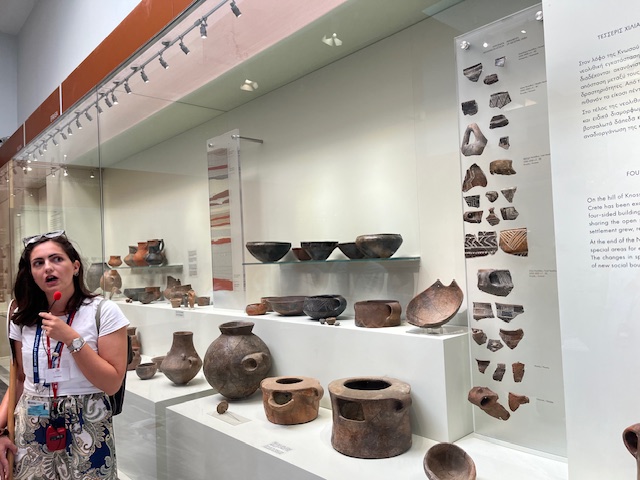
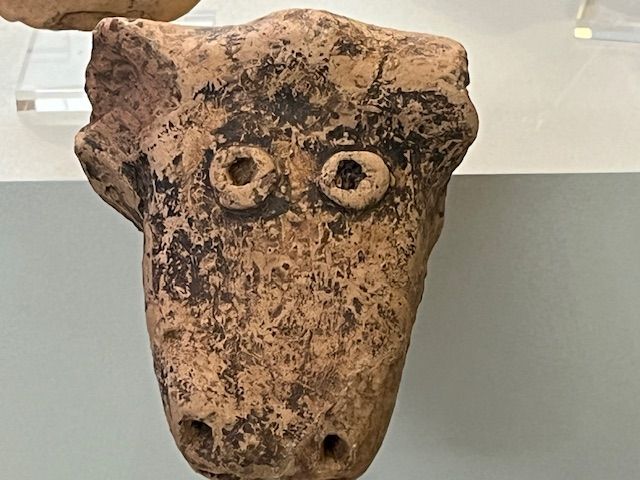
The artefacts we saw dated from 6000BC to 1AD and plotted a gradual shift from nomadic to primitive city life and the great palace of Minoa. Here's a Minoan clay cow for you!
There was development of pottery and bonework, textiles, language and clay tablet writing (Linear B script) and then proper mudbrick houses and then a palace. With it went development of trade and systems of governance.
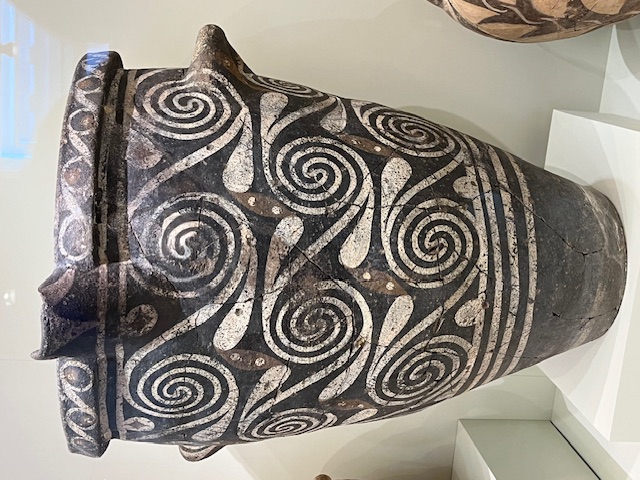
Like Rhodes, Crete had suffered many invasions, so also like Rhodes, they were happy to receive the protection of Greece and continue their own culture within it.
The guide was a a young woman who fired words at machine gun speed (!) and looked exhausted at the end of the tour.
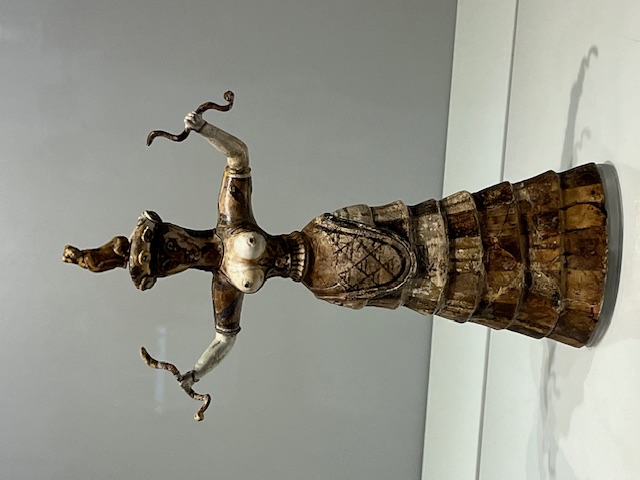
Things then took a dive as she left us for 45 minutes to visit the 'old town' but couldn't say exactly where it was and there were no maps, so we went back on the coach. Here's the Madonna with the.....and elaborate funerary boxes
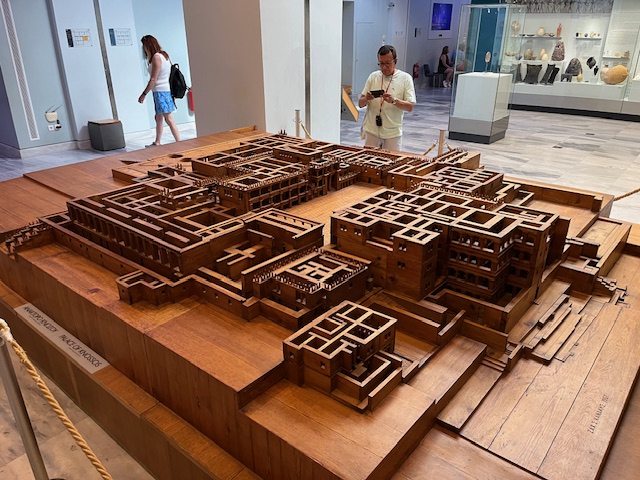
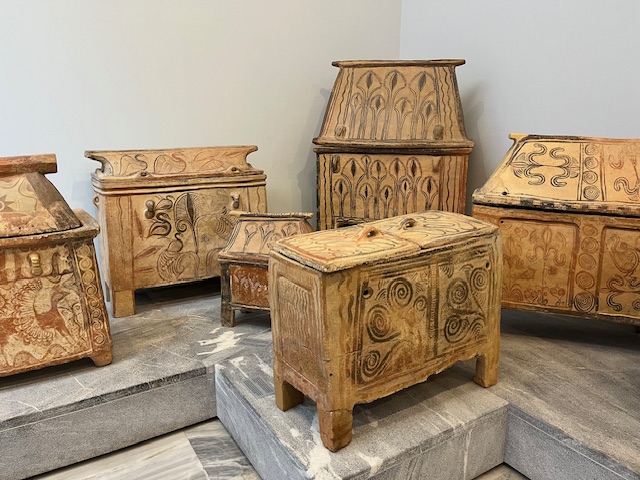
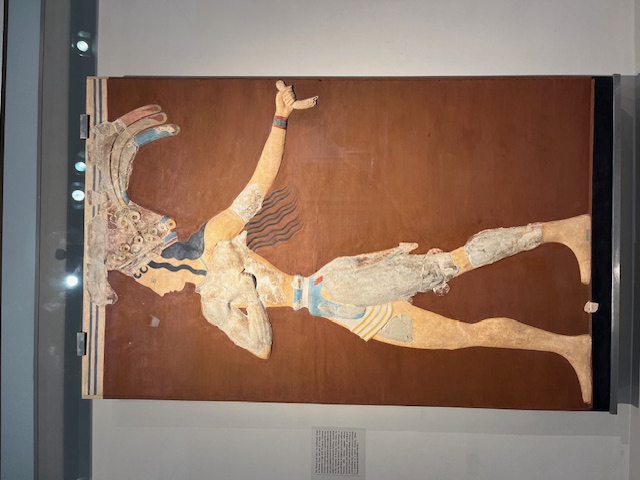
Others had chosen really long tours (6 hours) to more distant locations but that would have been too long for us.
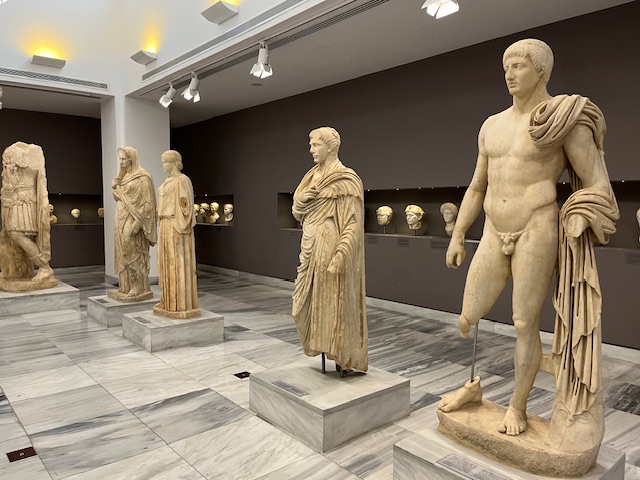
Tomorrow Athens for two days. Minoan palace. Finally Greek statues. As our guide said yesterday, Greek statues are mostly naked and beautiful, Roman ones all ugly, because Greeks 'massaged' the figures to look good whereas the Romans told it how it really is, pimples and all!